
Article contents
In short
General dentist consultation
500 UAH
exam and a treatment plan with prices
The exam takes
20–30 minutes
longer in complex cases
Open
9:00–21:00
every day
Locations
3
Obolon, Pozniaky, Pechersk
The cause of stomatitis is determined by a dentist after an exam. This article is not a substitute for a consultation.
Mouth sores not going away? Have a dentist look at them
General dentist consultation — 500 UAH: exam and a treatment plan with prices
First there is burning or redness on the lip, cheek or tongue. Then a painful sore appears, and every meal becomes an ordeal.
Most often this is stomatitis. It is unpleasant, but in most cases it goes away. What matters is understanding what caused it and not missing the signs that you need a dentist.
What stomatitis is
Key point
Stomatitis is inflammation of the lining of the mouth: redness, burning, painful sores.
It can appear on the inside of the lips and cheeks, on the tongue, gums or palate. It is not a single disease but a general name: it can be caused by an injury, a virus, a fungus, irritation or other reasons. That is why the right help differs from case to case.
How it usually shows up
- redness and swelling of the lining of the mouth;
- one or several painful sores with a white or yellowish coating and a red rim;
- burning and pain when you eat, drink or talk;
- a white coating on the lining of the mouth or the tongue.
Types of stomatitis
Here are the types people most often bring to the dentist.
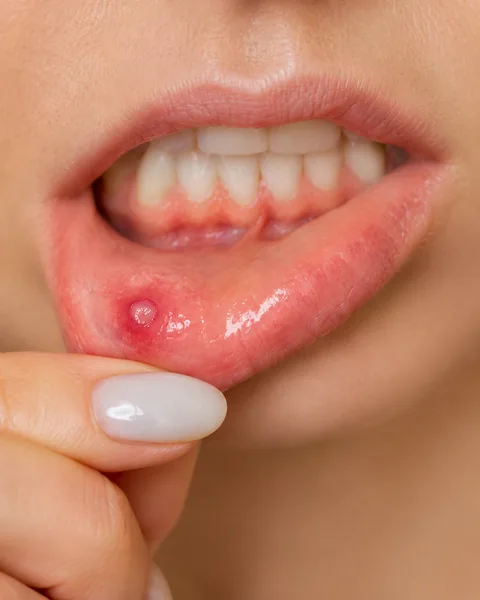
stomatitis
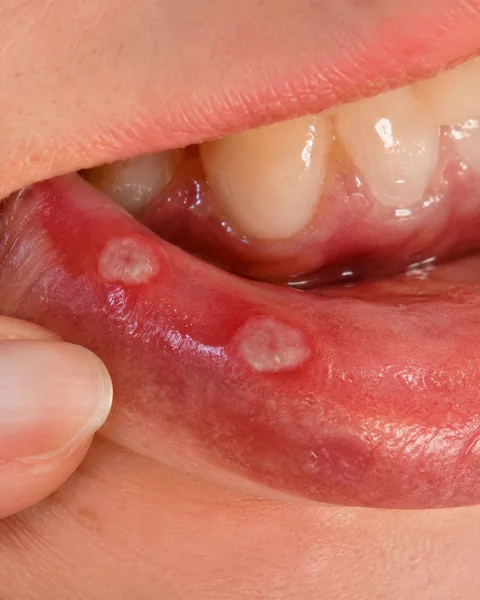
stomatitis
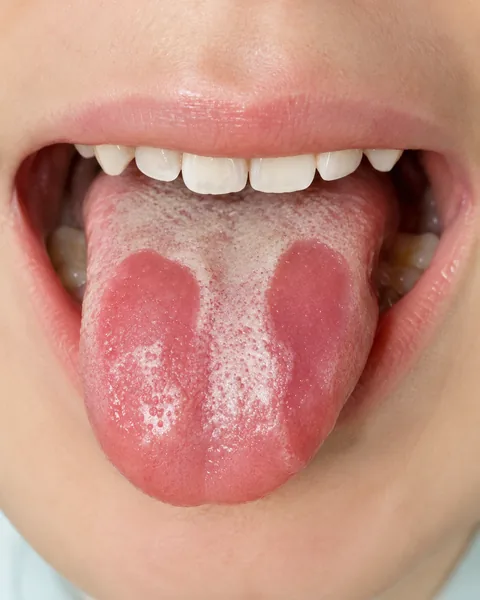
stomatitis
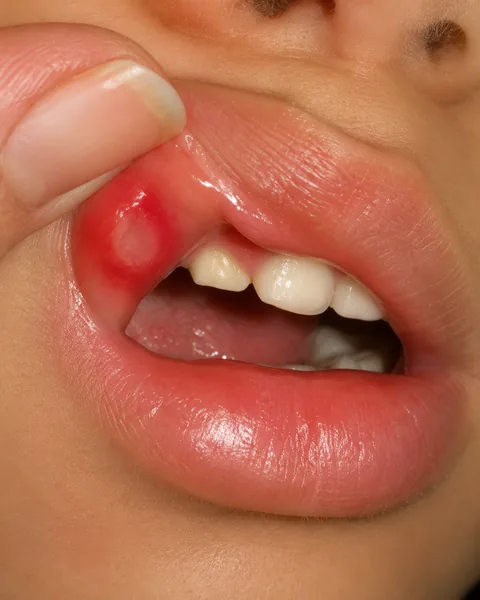
stomatitis
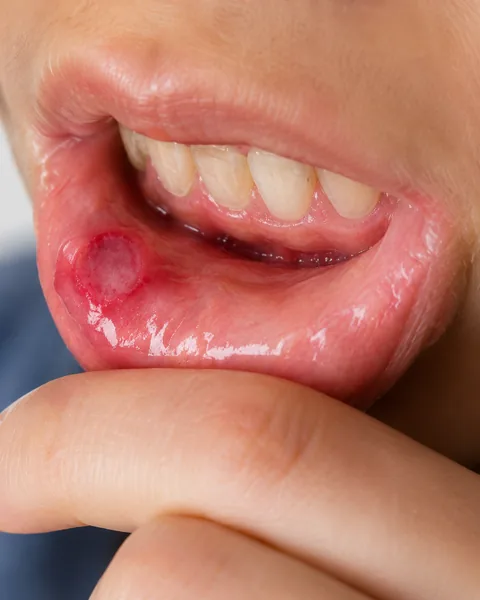
stomatitis
Stomatitis is more likely when the body is run down: after an illness, under stress or with chronic conditions. That is why the dentist will always ask about your general health.
What you can do at home
While the sore heals, a few simple rules help avoid irritating it.
Better
- Soft food at room temperature.
- A soft brush: brush gently around the sore.
- Drinking enough water.
- Remedies, if needed, are recommended by a dentist after an exam.
Avoid
- Spicy, sour, salty, very hot or hard food.
- Putting off brushing because it hurts.
- Touching, piercing or cauterizing the sore.
- Choosing medications and rinses on your own.
When to see a dentist
There are signs that mean you should not wait for the sore to go away on its own.
- a sore has not healed for more than 2 weeks;
- there are many sores, they are large or very painful;
- you have a fever or feel weak;
- pain makes it hard to eat and drink, or a child refuses food and drink;
- stomatitis keeps coming back;
- the sore is where a denture, braces or a sharp tooth edge rubs.
If a child has stomatitis, book a pediatric dentist consultation. If the child has a high fever, also see a pediatrician.
Recognize your case? Book an exam
General dentist consultation — 500 UAH: exam and a treatment plan with prices
How we treat it
We do not have a separate “stomatitis treatment” service. You book a consultation, and the dentist examines your mouth and prescribes treatment.
- 01
Conversation
The dentist asks when the sores appeared, whether you have had them before, what conditions you have and what medications you take.
- 02
Exam
The dentist examines the lining of the mouth, tongue, gums and teeth, and checks for sharp edges of teeth and fillings and how a denture or braces fit.
- 03
Treatment
The dentist prescribes treatment depending on the cause and explains what to do at home.
- 04
What injures the lining
If a tooth, filling or denture rubs the sore, the dentist will explain what can be fixed and tell you the cost before any work begins.
- 05
If the cause is not in the mouth
Sometimes stomatitis is linked to your general health. Then the dentist will advise which other specialist to see.
How to lower the risk of stomatitis
You cannot fully protect yourself from stomatitis, but some habits lower the risk.
- brush your teeth twice a day with a soft brush without injuring your gums and cheeks;
- care for removable dentures and braces the way your dentist advises;
- do not put off a visit if a tooth or filling has a sharp edge;
- come for a checkup every 6 months. How often to get a cleaning — in the article “How often to get a professional teeth cleaning”.
How much it costs
Price from our price list as of November 2026.
If during the exam the dentist finds something that needs treatment or fixing, they will tell you the cost and add it to the plan before any work begins.
Who will treat you
Stomatitis is seen by Eurozet general dentists.

Anna Oleksandrivna
Chief dentist, general dentist

Alona Vitaliivna
General dentist

Olesia Volodymyrivna
General and pediatric dentist

Yaroslav Serhiiovych
General dentist

Yaroslav Olehovych
General dentist, prosthodontist

Inna Mykolaivna
General dentist

Tetiana Viacheslavivna
General dentist

Maryna Ihorivna
General dentist
General dentist consultation
Exam and a treatment plan with prices
What to bring to the consultation
- A list of chronic conditions, allergies and medications you take. The dentist will definitely ask about this.
- Recall when the sores appeared, whether you have had them before and what you have already used on them.
- Your questions. For example: what caused the stomatitis, is it contagious, what can I eat, when should I come back.
Frequently asked questions
Is stomatitis contagious?
It depends on the cause. Viral (herpetic) stomatitis can be passed to others, so until it is gone it is better to use separate dishes and a separate towel. Stomatitis caused by an injury or irritation is not contagious.
How long does stomatitis take to heal?
Small sores usually heal in 1–2 weeks. If a sore has not healed for more than 2 weeks or keeps coming back, see a dentist.
Can I treat stomatitis on my own?
It is better not to pick medications and rinses by guesswork: a remedy that helps with one cause of stomatitis will not help with another. The dentist will find the cause and prescribe treatment.
What should I do if my child has stomatitis?
Book a pediatric dentist consultation for your child. If the child refuses to drink or has a high fever, also see a pediatrician.
Which dentist should I see for stomatitis?
A general dentist, or a pediatric dentist for a child. Call +38 (098) 661 10 99, and the front desk will find a convenient time and location.